EV Ready & EVEMS

Plan EV charging around the electrical system you actually have

PTX helps homeowners, strata corporations, housing co-operatives and managed properties evaluate capacity, charging goals and future expansion before committing to equipment or infrastructure.

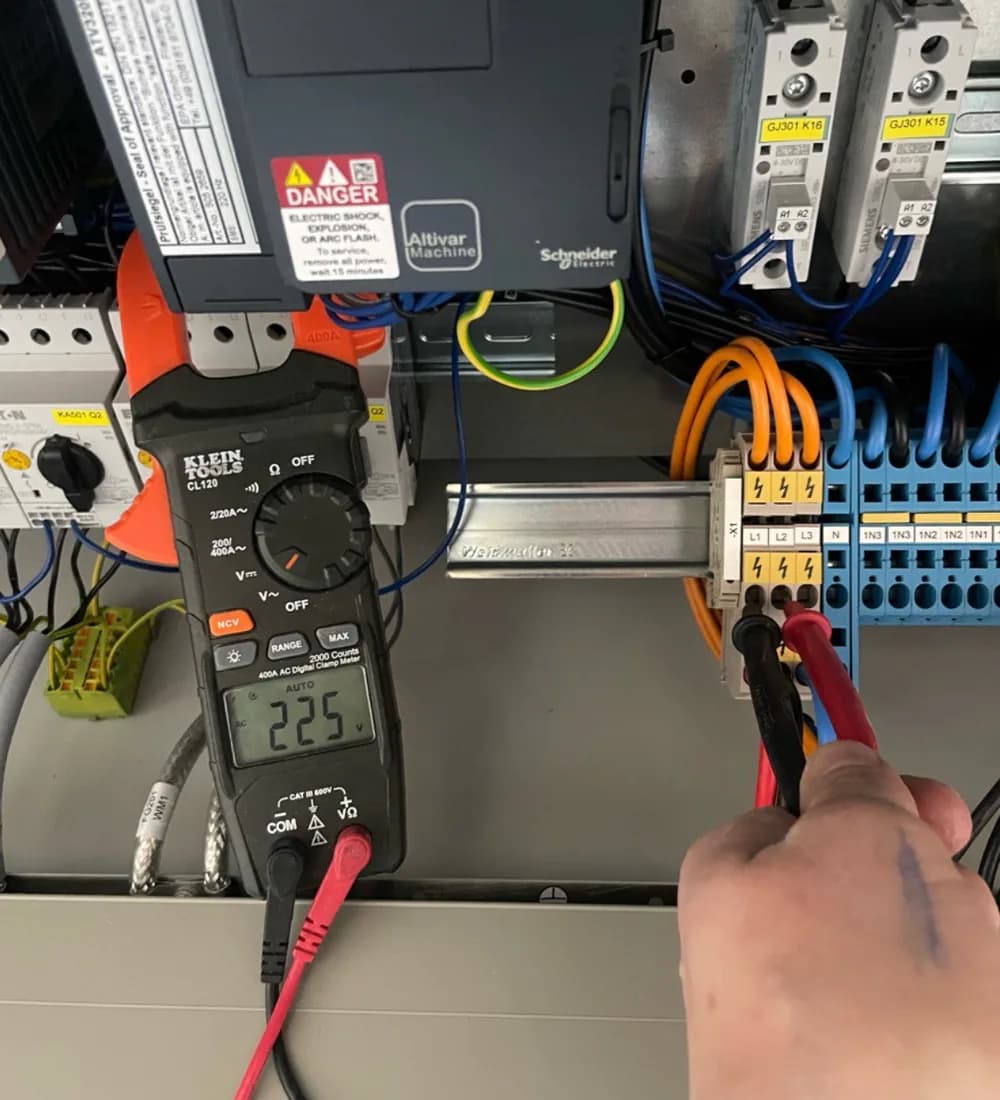
Electrical testing inside EV energy-management equipment
Capacity review
EV Ready planning
EVEMS strategy
Infrastructure and charger support

01

Five checks before selecting an EVEMS

Switching and dynamic control are different

A switching system pauses charging when the monitored load reaches its approved threshold. A dynamic system can reduce charging current and increase it again as capacity becomes available. The operating experience and supported equipment are not the same.

Monitoring does not always mean an energy dashboard

A device may measure total current only to control charging. Real-time customer displays, historical data, circuit-level detail and exportable reporting are separate capabilities that must be confirmed.

One home and one building are different problems

A home EVEMS usually manages one charger against one dwelling or service. A strata system must consider shared distribution, many parking stalls, resident participation, administration and future charger additions.

Network and vendor dependence must be understood

Confirm internet requirements, charger compatibility, communications-loss behaviour, recurring software fees, data access, account ownership and what happens if the vendor or platform changes.

Rebate eligibility is a separate decision

Technical suitability does not prove program eligibility. Current program rules, approved equipment, application timing and written pre-approval must be checked before eligible costs are committed.

02

Four common EVEMS approaches

Branch-circuit sharing

A priority appliance and charger share an approved circuit arrangement. This is not whole-service capacity management.

Panel or feeder load shedding

Current is measured at a panel or feeder and charging pauses when the approved threshold is reached.

Dynamic home load management

A compatible system adjusts charger output as home demand changes and may provide owner-facing energy information.

Building-wide management

A coordinated system allocates capacity among multiple chargers and may include resident access, billing, usage and reporting.

03

Plan for the property—not only the first charger

Resident and ownership objectives

Define whether the goal is one approved charger, EV Ready infrastructure for every stall, a shared charging system or a staged path that can grow as residents participate.

Service, distribution and pathways

Review accessible service equipment, transformers, feeders, panels, parking layouts and cable routes so the strategy reflects the building that exists.

Administration and billing

Decide who approves users, owns accounts and data, recovers electricity and platform costs, handles resident changes and responds when communications or charging equipment fails.

Future additions

The first installation should not consume capacity, pathways or equipment space in a way that makes later participation unnecessarily expensive or technically difficult.

04

The PTX EV Ready and EVEMS project path

1. Define the property and charging objective

Confirm building type, parking, existing chargers, intended users, ownership model and the desired long-term participation level.

2. Review electrical capacity and pathways

Organize available records and assess accessible service, distribution, panels, demand information and practical routes to the parking area.

3. Compare electrical strategies

Compare dedicated capacity, switching, dynamic control, building-wide allocation, staged distribution and service-upgrade implications.

4. Select the system and secure approvals

Confirm equipment compatibility, operating model, permit path, engineering or utility involvement and current rebate requirements before committing eligible work.

5. Install, commission and document

Complete the authorized infrastructure and equipment work, verify controls and charger behaviour, label the system and provide the applicable close-out records.

6. Support additions and system changes

Future chargers, resident turnover, platform changes and electrical additions should follow the approved capacity and operating rules rather than being treated as unrelated installations.

05

Rebate planning in plain language

Confirm the project pathway

A planning rebate, infrastructure rebate and charger rebate can have different eligibility rules and submission requirements. Identify the applicable pathway before relying on funding.

Confirm current equipment and timing rules

Approved-product lists, maximum amounts, deadlines and funding availability can change. Written program guidance and pre-approval requirements govern—not an old webpage or proposal.

Keep decision and installation records

Retain plans, approvals, invoices, equipment information, permits and commissioning records needed for the application and future building operation.

06

Questions to answer before approving a system

What exactly is being monitored?

Identify the service, feeder, panel, branch circuit or charger group being measured and whether the measurement represents every load that matters to the capacity decision.

How does charging behave near the limit?

Confirm whether charging pauses, reduces current, shares a fixed allocation or uses another control sequence—and what residents should expect during peak building demand.

Which chargers and future quantities are supported?

Compatibility today does not automatically establish the number, type or brand of chargers that can be added later.

Who owns the platform and data?

Confirm administrator access, resident accounts, billing records, privacy responsibilities, exportability and transition options if the provider changes.

What happens without internet or vendor service?

The safe fallback state, local control, troubleshooting path, replacement options and continued charging behaviour should be known before approval.

Who supports the complete system?

Clarify the boundaries among PTX, the engineer where required, charger supplier, EVEMS vendor, network operator, utility, strata and resident.

Questions

What customers usually need to know

Can an EVEMS avoid a service upgrade?

Sometimes. It may avoid, reduce or defer an upgrade by controlling charging within an approved capacity limit. The answer depends on existing and future loads.

Does an EVEMS make charging slower?

It can. A switching system may pause charging, while a dynamic system may reduce current during higher building demand.

Is whole-panel monitoring the same as an energy dashboard?

Not necessarily. A device may measure total current only for control. Owner-facing real-time and historical energy information is a separate capability.

Can one EVEMS manage several chargers?

Some can and some cannot. Hardware, charger communications, distribution design and the operating platform all need to support the intended number of users.

Can a strata use individual load-shedding devices instead of a building-wide system?

Sometimes, but approving isolated devices without a building strategy can consume capacity and pathways unpredictably. The strata should understand the cumulative effect and future participation plan first.

Do EVEMS products provide resident billing?

Some platforms include access, metering or billing functions; others only control electrical load. Billing capability, accuracy, fees, administration and data ownership must be confirmed separately.

Do I need an EV Ready Plan before selecting an EVEMS?

For a multi-unit property, planning first is usually the safer decision because the EVEMS is only one part of capacity, distribution, pathways, parking, approvals and future participation. Program requirements should also be checked independently.

Is Wi-Fi required?

Not for every system. Some use local controls, wired communications, cellular service or internet platforms. Confirm the required connection and the system's behaviour when communications are unavailable.

Can PTX install the charger as well as the EVEMS?

PTX can coordinate and complete authorized electrical infrastructure, EVEMS and charger work within the approved design, permit and equipment scope, involving engineers, utilities or vendors where required.

Does PTX confirm rebate eligibility?

PTX can support the rebate path, but eligibility, approved models, deadlines and funding change. Current program requirements and written pre-approval should be confirmed before equipment is purchased or work begins.

Start with useful information

Tell PTX about the property, problem and timing.

For planned work, send the address, access context and safe photographs. For an urgent electrical safety concern, call the 24-hour emergency phone line.