
Everyday electrical repairs
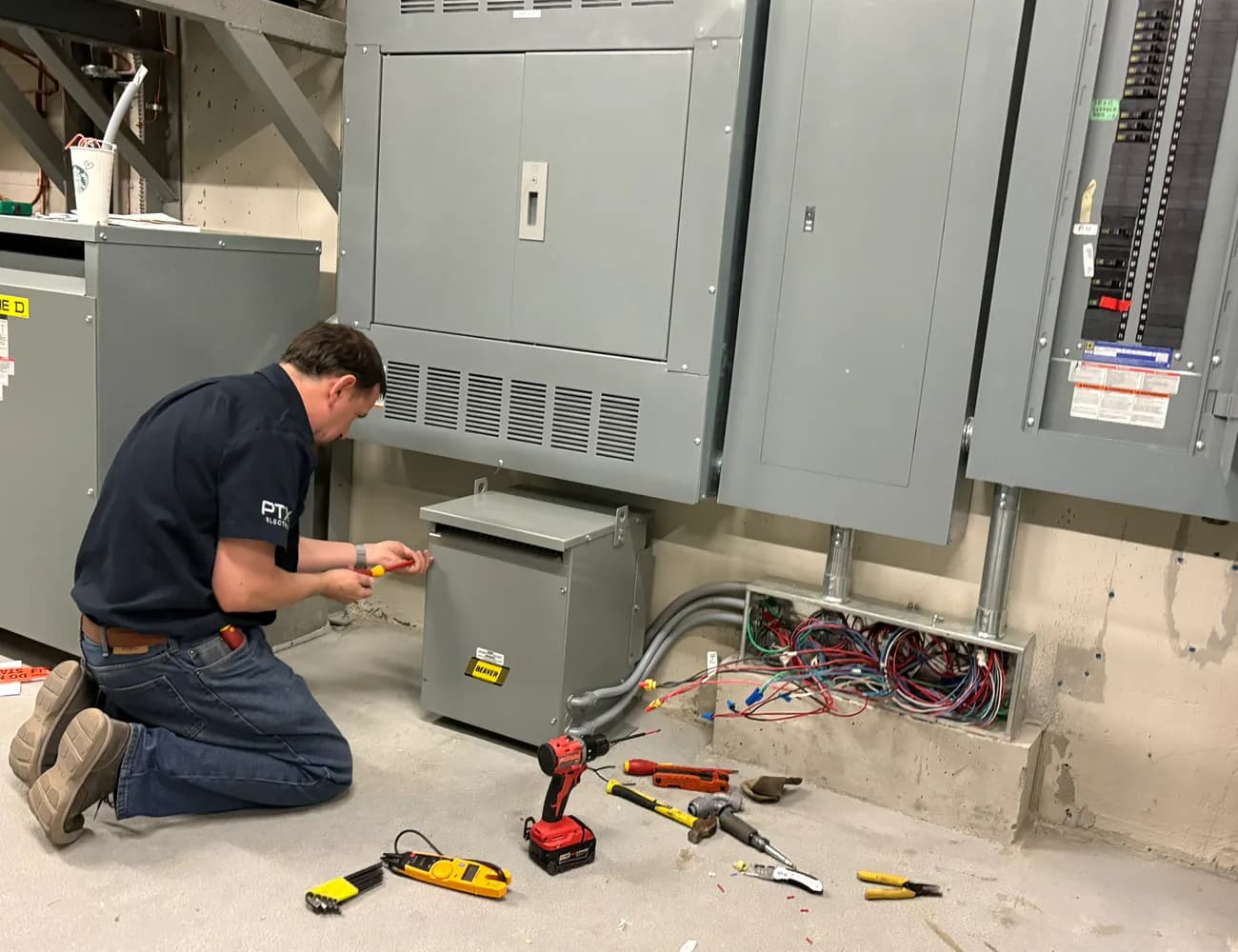
PTX handles common-area and authorized suite work including lighting, switches, receptacles, breakers, controls, sensors, timers, fans and contained electrical additions.
Managed-property electrical partnerships
PTX supports the people responsible for occupied buildings with everyday repairs, emergency response, clear documentation and practical planning. The relationship can begin with one failed light or tripping breaker and grow into recurring service, assessments and suitable capital work.
01
PTX handles common-area and authorized suite work including lighting, switches, receptacles, breakers, controls, sensors, timers, fans and contained electrical additions.
Property teams can call for repeated trips, partial power loss, damaged equipment, water exposure and failures affecting access, ventilation, lighting or safe building operation.
A breaker reset or another replacement lamp is not always the repair. PTX investigates recurring failures and explains whether the next step is repair, assessment or planned renewal.
Work is organized around authorization, suite entry, common areas, resident communication, building security, parking and the people using the property.
02
Authorized contacts, access procedures, approval limits, invoicing requirements and emergency instructions can be kept consistent across one building or a portfolio.
Each request is treated as emergency, priority service, planned maintenance, assessment or a defined project so expectations match the work.
Depending on scope, PTX can provide work actions, photographs, installed equipment information, deficiencies, recommendations, permit references and follow-up priorities.
Consistent records reveal recurring failures, obsolete equipment, standardization opportunities and work that should move from operating expense into capital planning.
03
Defined condition reviews help separate immediate corrective work from near-term reliability needs and longer-term capacity or renewal decisions.
PTX helps identify the correct regulated provider path, supports field information and connects the EPR's capacity findings to practical next steps.
Building-wide EV planning considers capacity, distribution, parking, pathways, charging management, approvals and future participation before isolated requests determine the system.
Common-area lighting can be reviewed as a system so councils can compare repeated repair, standardization, controls, phased upgrades and current incentive pathways.
04
Unsafe or failed electrical conditions are controlled and repaired first, with temporary conditions and required follow-up clearly identified.
Equipment condition, service history and supportability can be organized into work that should be budgeted before reliability becomes a larger problem.
When electrical access affects walls or ceilings, PTX can coordinate in-house drywall repair and suitable handyman finishing instead of leaving the property to find additional trades.
For the right established client, PTX can carry suitable service-led projects generally below $100,000 and coordinate engineers, utilities, equipment specialists or other professionals when required.
05
Clear service, planning and documentation for volunteer decision-makers responsible for shared electrical systems and resident needs.
One accountable path for work orders, access, approvals, service history, estimates and building electrical priorities.
Electrical service for occupied residential and commercial areas where coordination and operational continuity matter.
Loss-site response, electrical risk mitigation, reporting, repair scopes and coordinated restoration work for authorized project teams.
Questions
Yes. The relationship can begin with a light, outlet, breaker or troubleshooting call and grow into assessments, building-wide upgrades and suitable service-led projects as scope and trust develop.
Yes. Contacts, access, approvals, invoicing and reporting expectations can be organized consistently across a portfolio while each building retains its own service history and priorities.
PTX provides 24-hour emergency phone response and dispatch. Active fire, injury, entrapment or immediate danger should be reported to 911 or the responsible emergency service first.
It depends on building classification and the designated professional required by provincial regulation. PTX helps confirm the provider path, contributes eligible electrical work and coordinates another qualified professional where required.
Yes, when work is authorized and safe access has been arranged. Responsibility, resident communication and any strata or management approval should be established before attendance.
PTX can help identify a likely current program and prepare electrical scope information. Eligibility, pre-approval and payment remain controlled by the program administrator and should never be assumed.
Start with useful information
For planned work, send the address, access context and safe photographs. For an urgent electrical safety concern, call the 24-hour emergency phone line.
PTX locations
New Westminster location