
Project account reviewed November 12, 2026 · Installation designed by PTX's Edward
The question: how can this building support EV charging?
Adding chargers to a shared residential property means looking beyond the first parking stall. The building's existing electrical demand, distribution equipment and routes to the charging area all affect the options available to the co-op.
For this installation, PTX used dynamic load management. Edward, who designed the installation, explains in the accompanying interviews that the team checked the building's actual usage rather than relying on a charger count alone.
The approach: use available capacity while building loads take priority
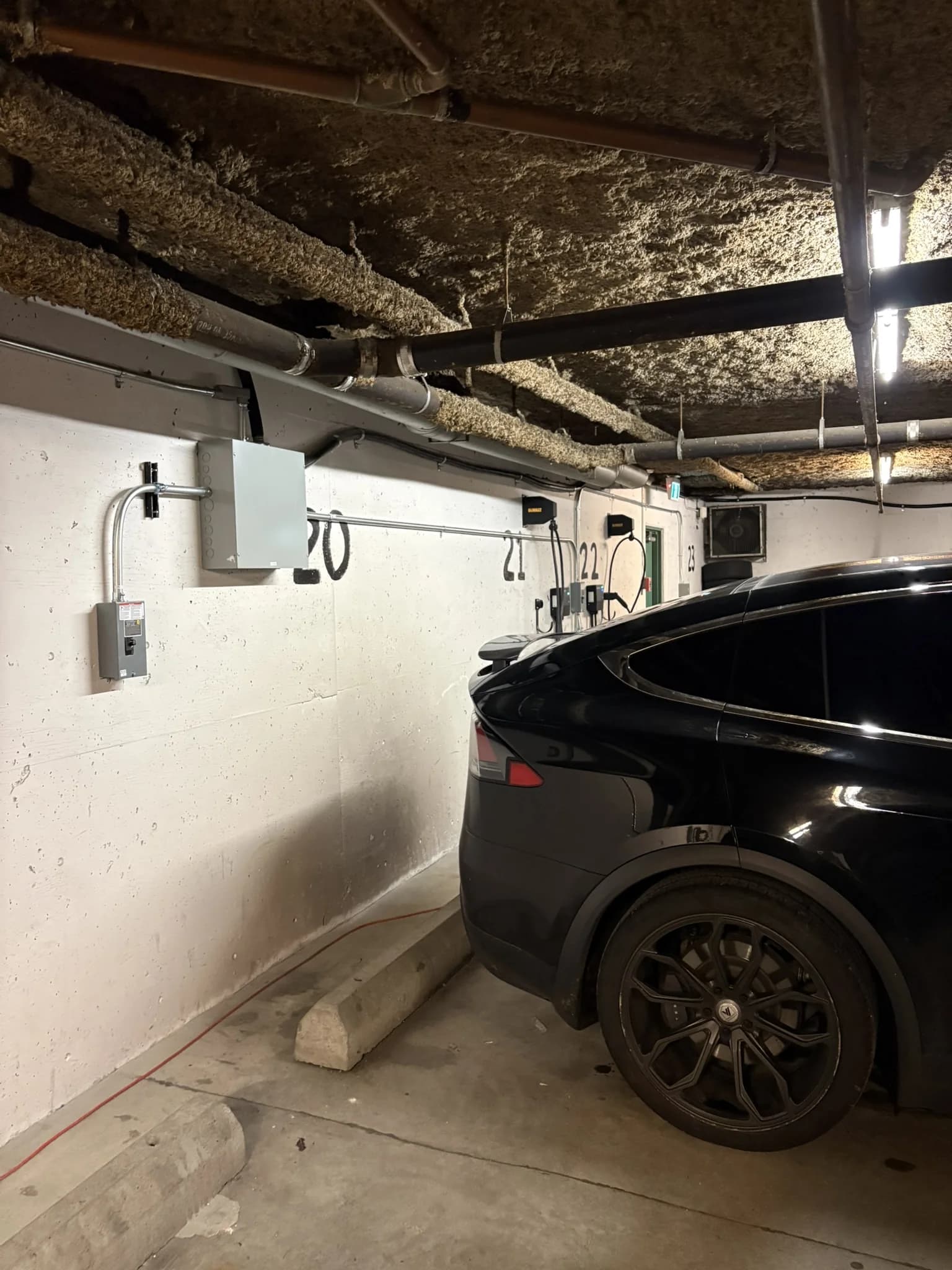
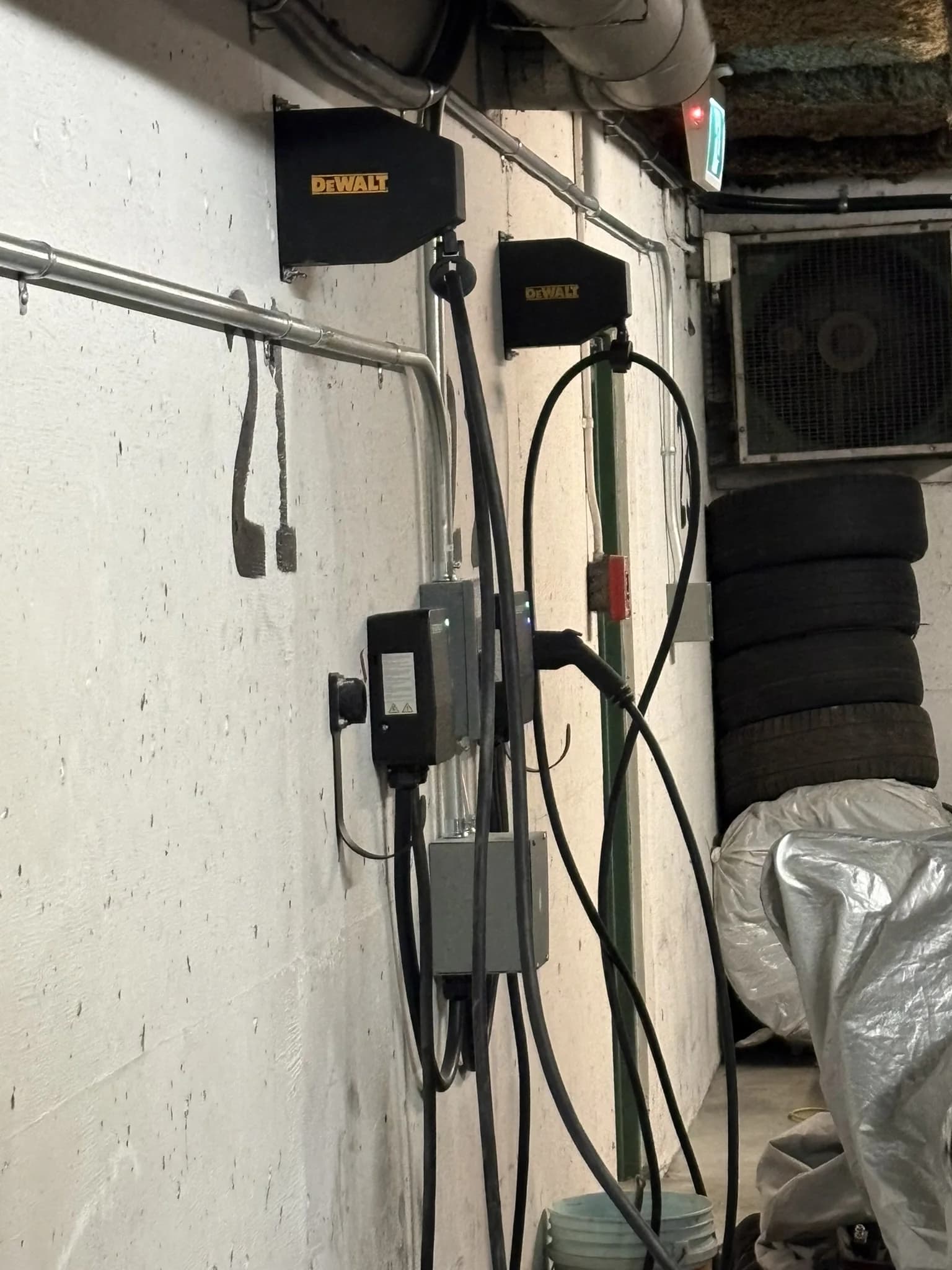
Edward describes a system that monitors the house panels and gives those building loads priority. EV charging uses available capacity as building demand changes. That makes the capacity assessment and the control strategy part of one installation decision.
The project footage shows the electrical equipment, routes through the parkade and installed chargers. PTX completed the installation, and the electrical installation passed inspection. The photographs and overview show the actual work.
What this helps a co-op board decide
The useful starting point is the property: existing electrical demand, parking arrangements, expected participation and how the chargers will be administered. Those facts help PTX compare load management, staged infrastructure and any distribution or service upgrades that may be needed.
This project demonstrates a completed approach for one assessed building. The charger counts discussed in the interviews are design examples, not the confirmed installed quantity or a promise for every 200 A service. The cost discussion is an informal comparison, not a quote for another property.
Edward explains the decisions
These reviewed summaries make the interview topics available in text. The original interviews and photographs are on the EV charging service page.
How many EV chargers can share a 200 A three-phase service?
The interview asks about 40 chargers on a 200 A service. Edward discusses dynamic load management and a possible count of 62 on a three-phase service. These are design discussion examples, not a statement of the number installed here or a capacity promise for another building.
Watch Edward's interview →Dynamic EV charging versus a full service upgrade
Edward describes programming the chargers and connecting them to a network for regulating charging and billing. The interview then compares the project approach with a larger power-distribution upgrade. Its conversational cost figures are estimates; this page does not present them as a verified quote or guaranteed saving.
Watch Edward's interview →PTX Dynamic Load Sharing for EV Charging
Edward explains that PTX looked at actual building usage when assessing charging capacity. Dynamic load management monitors the house panels and gives those building loads priority. Charging uses available capacity as demand changes. The design is specific to the assessed building.
Watch Edward's interview →Start with your building's charging plans
Tell PTX about the property, parking stalls, existing chargers and what residents need next. We can discuss the assessment and planning steps before equipment or an installation scope is selected.